
/ Innovations
explore Open Civic INnovation domains
Explore dashboards surfacing experimentation in the field of Open Civic Innovation.
-

Network Governance
A decentralized model of coordination where autonomous actors — individuals, organizations, or communities — collaborate through shared principles, trust, and mutual accountability rather than centralized authority.
EXPLORE → -

Bioregional Coordination
Place-based governance that organizes collaboration around natural boundaries rather than political borders. It aligns human activity with ecological realities, fostering stewardship, resilience, and shared responsibility within a living landscape.
EXPLORE → -

Open Protocols
Shared technical and social standards that allow diverse systems to interoperate without permission or control. Open protocols create the connective tissue for networks of networks — enabling trust, composability, and innovation across communities.
EXPLORE → -

Digital Public Infrastructure
Foundational digital systems — identity, data, payments, communications — built as commons rather than platforms. DPI ensures equitable access, interoperability, and democratic governance of the tools societies depend on.
→ EXPLORE -

Knowledge & Data Commoning
The collective stewardship of information, research, and cultural assets as shared resources. Knowledge commoning transforms intellectual property into intellectual ecology — enabling continuous learning, adaptation, and contribution.
→ EXPLORE -

Capital Allocation
Redesigning how value flows through networks to align capital with care. This includes cooperative finance, public-interest investment, and regenerative funding mechanisms that prioritize long-term resilience over short-term extraction.
→ EXPLORE -

Metacrisis Awareness
Cultivating the capacity to perceive interconnected crises — ecological, social, technological, and spiritual — as symptoms of a deeper systemic imbalance. Metacrisis awareness invites transformation at the level of worldview, not just policy or technology.
→ EXPLORE -

Collective Intelligence
The emergent capacity of groups to think, learn, and act together more effectively than any individual alone. Collective intelligence arises through well-designed feedback loops, shared sense-making, and participatory governance practices.
→ EXPLORE -

Impact Evaluation
Measuring and learning from the outcomes of social, ecological, and economic interventions through systemic lenses. Impact evaluation shifts from narrow metrics of efficiency or growth toward understanding contribution, vitality, and resilience within living systems.
→ EXPLORE -

Cosmolocal Networks
Frameworks that connect human systems to deeper cosmological patterns — cycles of time, energy, and interbeing. Cosmological networks integrate indigenous knowledge, spiritual insight, and scientific understanding to align governance and technology with living planetary rhythms.
→ EXPLORE -

Citizen Science
Collaborative research processes where community members generate, interpret, and act upon data relevant to their own environments. Citizen science democratizes knowledge production, fostering local stewardship, transparency, and accountability in scientific inquiry.
→ EXPLORE -

Currency Design
The intentional exchange systems that reflect shared values and reinforce healthy social and ecological relationships. Currency design explores complementary, mutual-credit, and regenerative forms of value circulation that strengthen communities and commons rather than extract from them.
→ EXPLORE -

Digital Democracy
Technological systems that expand participatory governance and civic agency in the digital era. Digital democracy includes tools for deliberation, collective decision-making, and transparent accountability, enabling more direct, distributed, and responsive forms of public power.
EXPLORE → -

Public Dialogue & Facilitation
Practices that enable open, inclusive, and constructive conversation across differences. Cultivating mutual understanding, shared purpose, and collective capacity for action – grounding this in care, equity, and adaptive process design.
EXPLORE → -
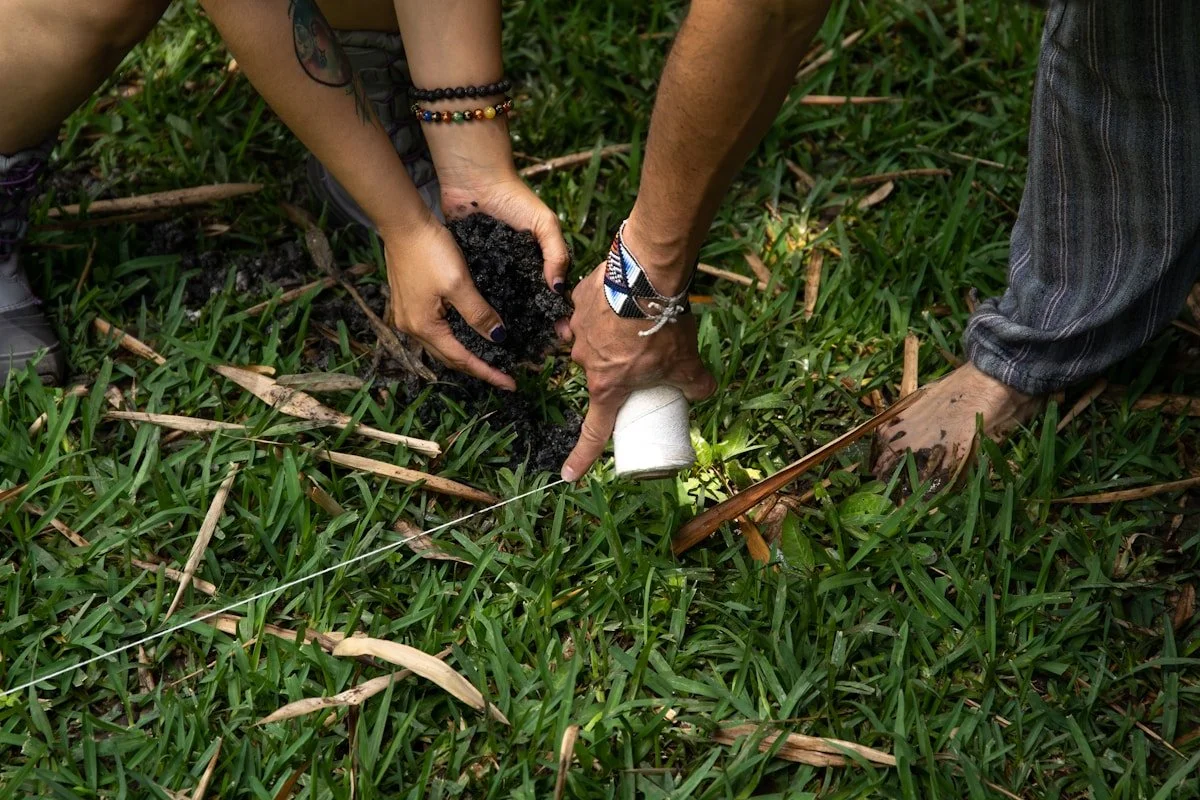
Regenerative Finance & Economy
Economic models that restore and sustain the health of ecological and social systems. Regenerative finance aligns incentives with renewal rather than depletion, redistributing value to where it enhances community wellbeing, biodiversity, and long-term planetary balance.
EXPLORE → -

Rights of Nature
A legal and ethical framework recognizing ecosystems as rights-bearing entities with intrinsic value. The Rights of Nature movement redefines justice to include the living Earth as a subject of care and stewardship — ensuring that governance systems protect and restore ecological integrity.
EXPLORE → -

Mutual Aid Networks
Horizontal community networks where members directly support each other's survival and wellbeing through voluntary reciprocity rather than charity or state provision. Mutual aid fosters collective decision-making, shared resources, and solidarity economics.
EXPLORE → -

Local Food Networks
Decentralized community-based food systems that prioritize relationships, sustainability, and food sovereignty over industrial agriculture. Local food networks build regional economic resilience while connecting producers and consumers through shared governance and mutual benefit.
EXPLORE → -

Public Intertest AI
The development, deployment, and governance of artificial intelligence systems in service of public good rather than narrow commercial interests. Public interest AI advances human rights, democratic values, and community participation in how AI shapes society.
EXPLORE →